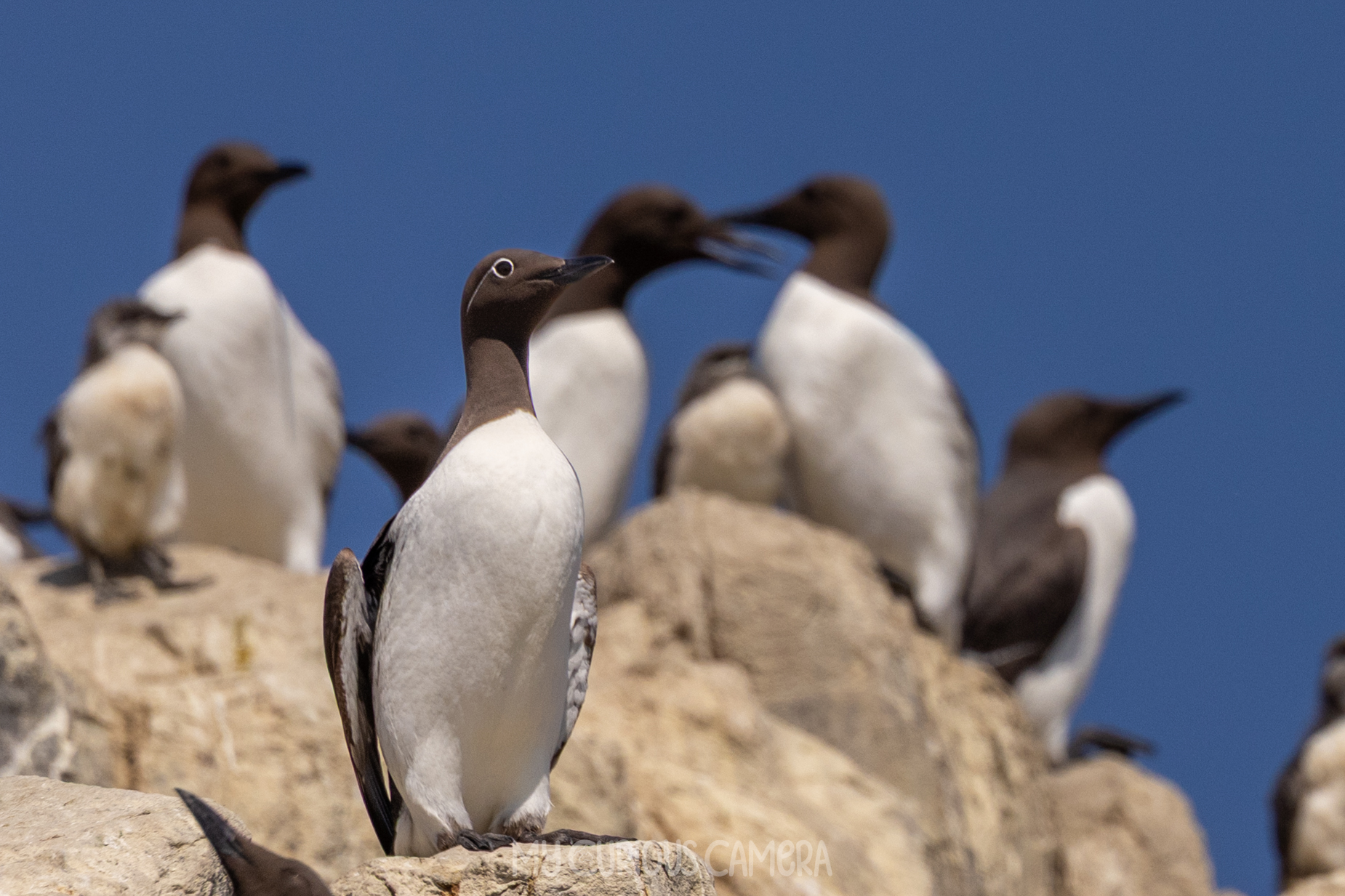
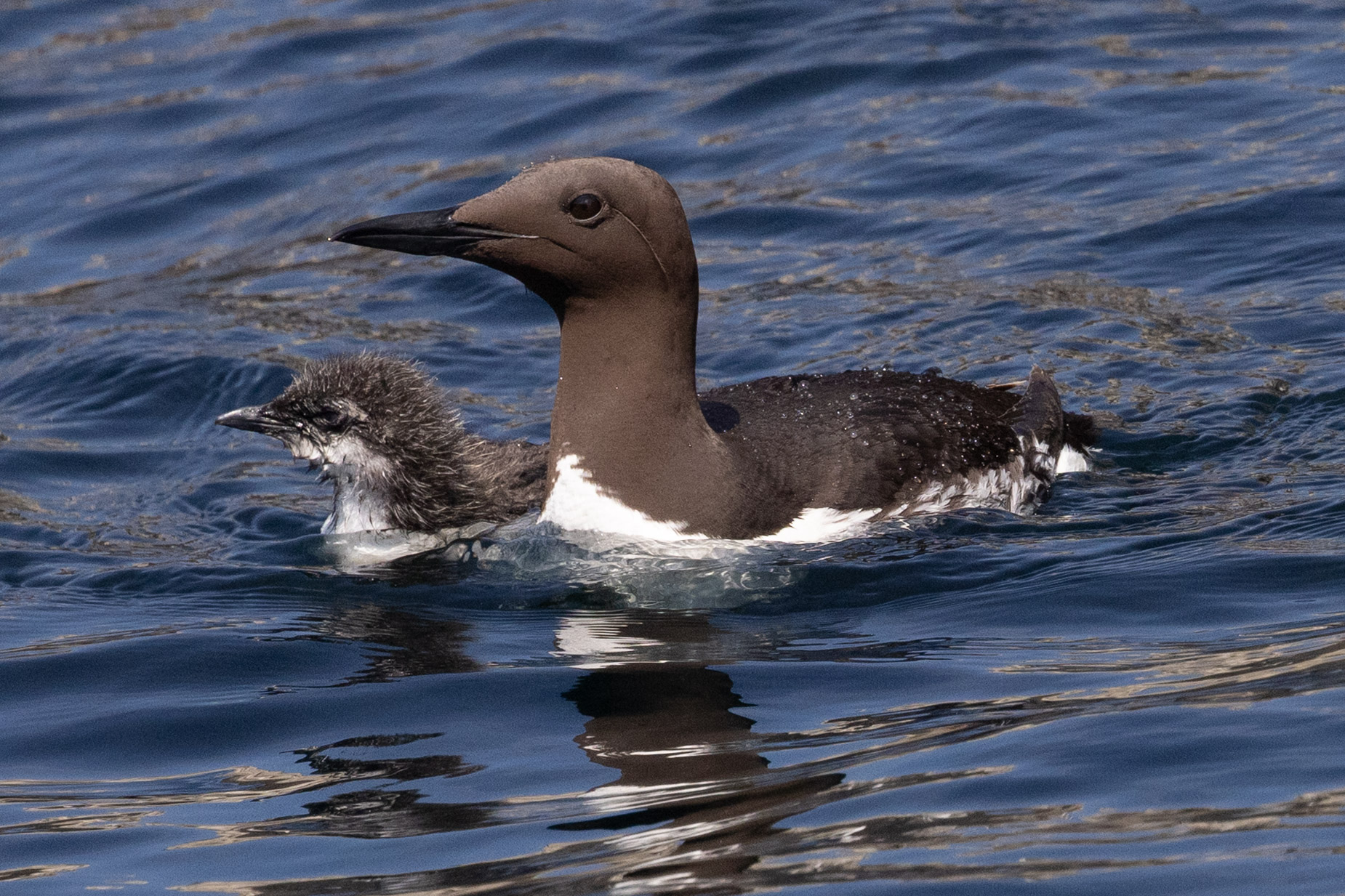
A group of nesting Guillemot on the cliff edge featuring a Bridled Guillemot
When most people think of the Farne Islands off the Northumberland coast, their minds go straight to the iconic Atlantic Puffin. And while those charismatic little birds are worth the trip alone, focusing entirely on them means missing out on one of the most spectacular, dense multi-species wildlife spectacles in the UK.
 
If you look past the burrows, the Farne Islands wildlife includes a dizzying array of seabirds and marine life. The wildlife density here is so immense that you could easily head out two or three times and find completely different stories to capture on each voyage.
 
Here is my ultimate guide to the incredible wildlife waiting for you on the Farnes—beyond the puffins.
1. The Cliff-Dwellers: Guillemots, Razorbills, and Kittiwakes
The moment your boat drifts alongside the towering volcanic basalt cliffs of the islands, you are hit by a wall of sound, smell, and pure energy. This is the realm of the cliff-nesting seabirds, packed tightly onto every available inch of rock.
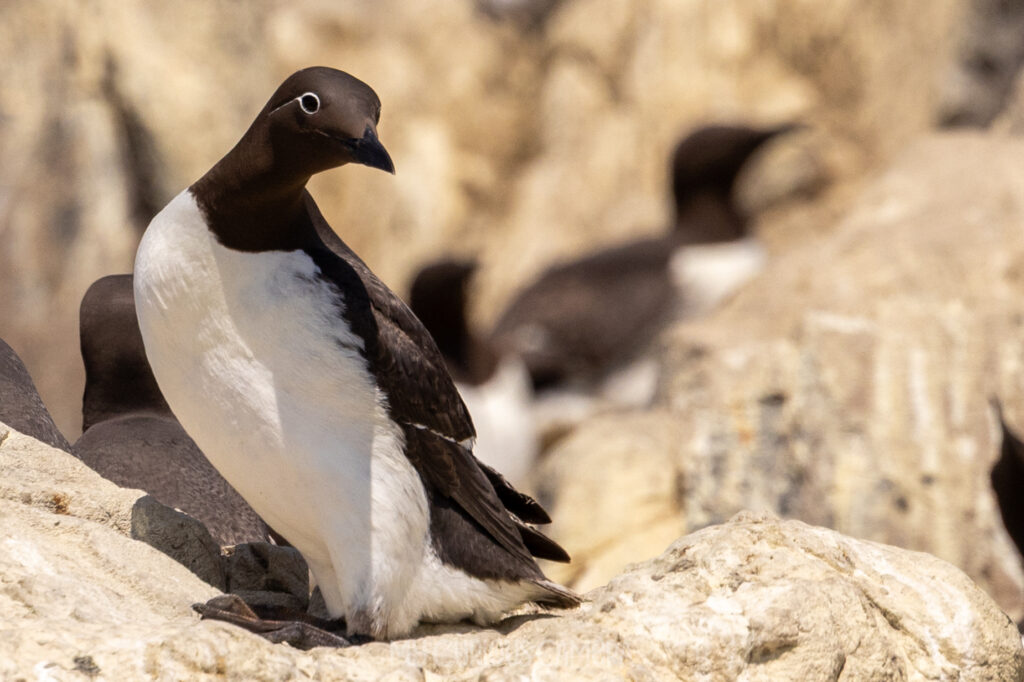
A close-up image of a bridled guillemot sitting on the cliff. Some of the brilliant Farne Islands Wildlife
The Elegant Guillemots & Striking Facial Markings
Look closely at the crowded ledges, and you will spot thousands of Common Guillemots standing shoulder-to-shoulder. If you look carefully through your lens, you might spot something fascinating: some of these birds possess a striking white ring around their eye that extends back in a clean white line. These are “Bridled” Guillemots. They aren’t a separate species, but a beautiful genetic variation that becomes more common the further north you travel towards the Arctic.
 
  • The Story Behind the Lens: If you visit during mid-summer, keep a sharp lookout for “Jumplings”—the tiny guillemot chicks. At just two weeks old, before they can even fly, these brave little chicks plunge hundreds of feet off the sheer cliff faces directly into the sea, guided safely down by the frantic calls of their fathers waiting in the water below.
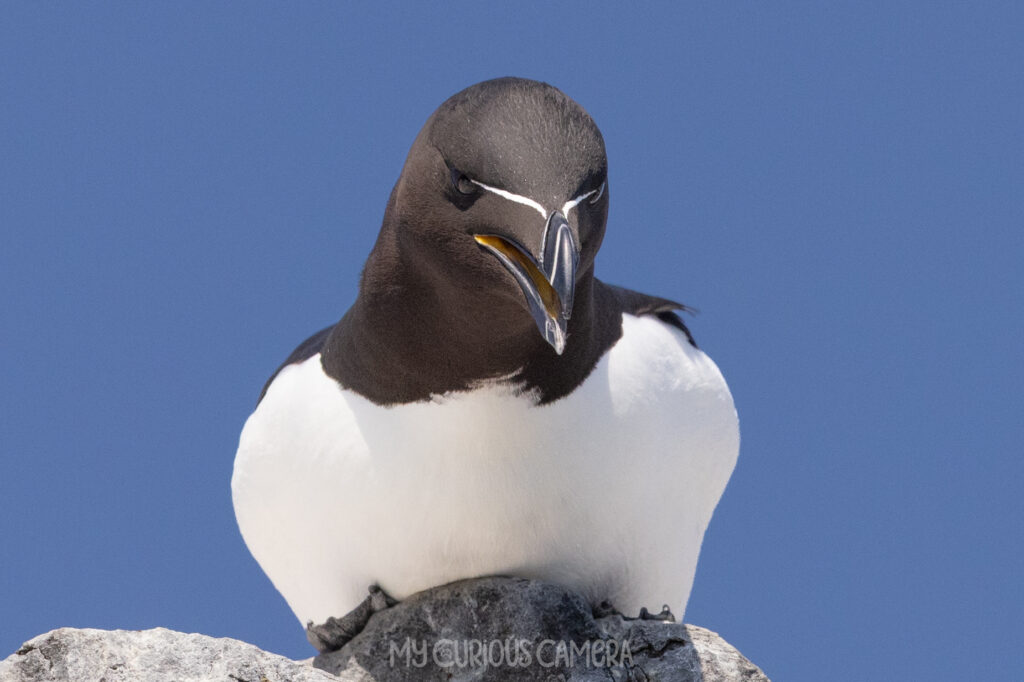
A close-up portrait of a Razorbill sitting on the cliff edge on Farne Island enjoying the toasty sunshine
The Razor-Sharp Razorbills
Interspersed among the guillemots are the Razorbills, instantly recognizable by their thick, deep black beaks adorned with a sharp white vertical stripe. They love to sit on the higher ledges, soaking up the rare British sunshine. They are incredibly photogenic, offering a stunning, high-contrast silhouette against the deep blue of the North Sea.
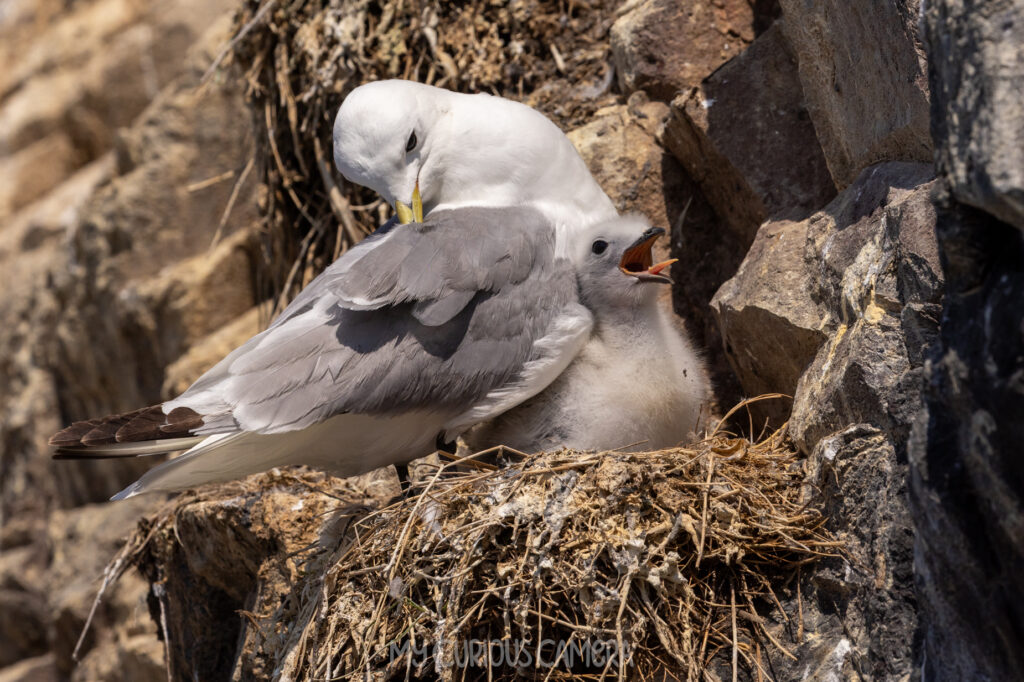
A close-up wildlife portrait of an adult Black-legged Kittiwake nesting with its calling chick on a narrow, precarious vertical volcanic rock ledge on the Farne Islands.
Nesting Black-Legged Kittiwakes
Tucked into the most precarious, narrow rock crevices are the Black-legged Kittiwakes. Watching an adult tend to its calling chick on a ledge barely wider than the bird itself is a masterclass in avian engineering. Their nests are glued to the vertical cliff faces using mud and seaweed, creating an incredibly intimate, dramatic frame for wildlife portraits.
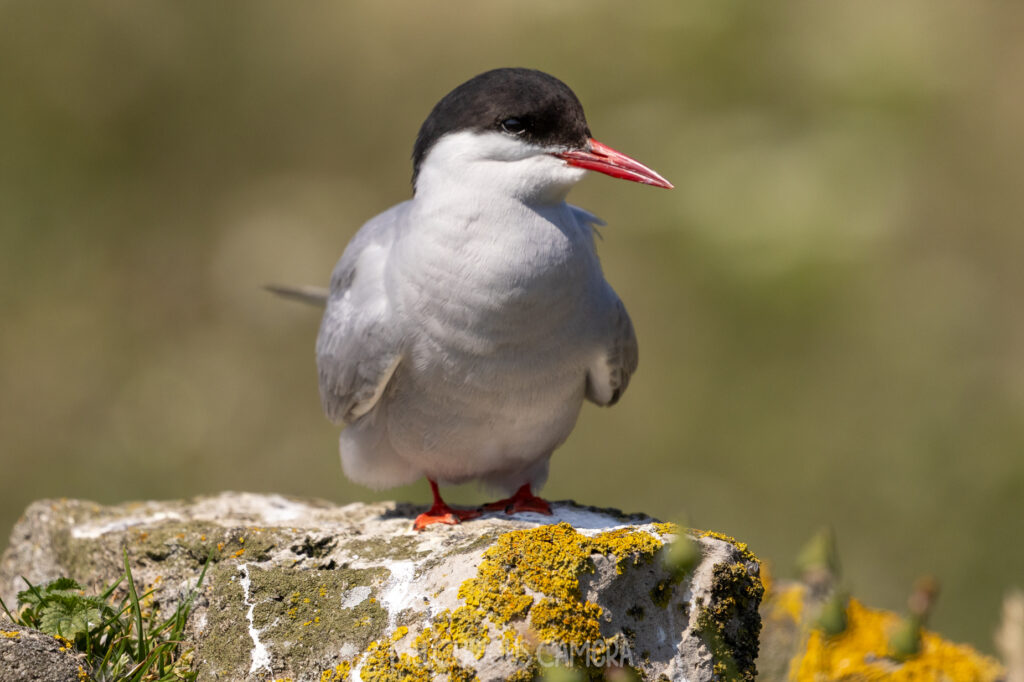
An elegant Arctic Tern perched proudly on a weathered, mossy stone wall along a visitor path on Inner Farne, showing its sharp black cap and vibrant red beak.
2. The Protective Ground-Dwellers: Arctic Terns
Once your boat lands and you step onto the wooden boardwalks managed by the National Trust, the environment shifts completely. You are now entering the territory of the fiercely protective Arctic Terns—and they will let you know it.
 
These elegant, silver-grey birds are the ultimate long-distance travelers, migrating all the way from the Antarctic to breed here. Because they nest right on the ground, often just inches from the visitor paths, they are incredibly defensive.
  • A Crucial Survival Tip: When the terns feel their nests are threatened, they will take to the sky en masse and dive-bomb your head with incredible precision. Do not land on the islands without a sturdy hat or cap! Holding a heavy camera up can sometimes draw their attention, so keep a hat on to protect your scalp while you navigate the paths.
  • The Shot to Look For: Despite their aggressive protective nature, they are exceptionally graceful. Look for them perched proudly on the weathered, mossy stone walls lining the paths. The contrast of their bright red beaks against the ancient grey stone makes for an iconic, clean composition.
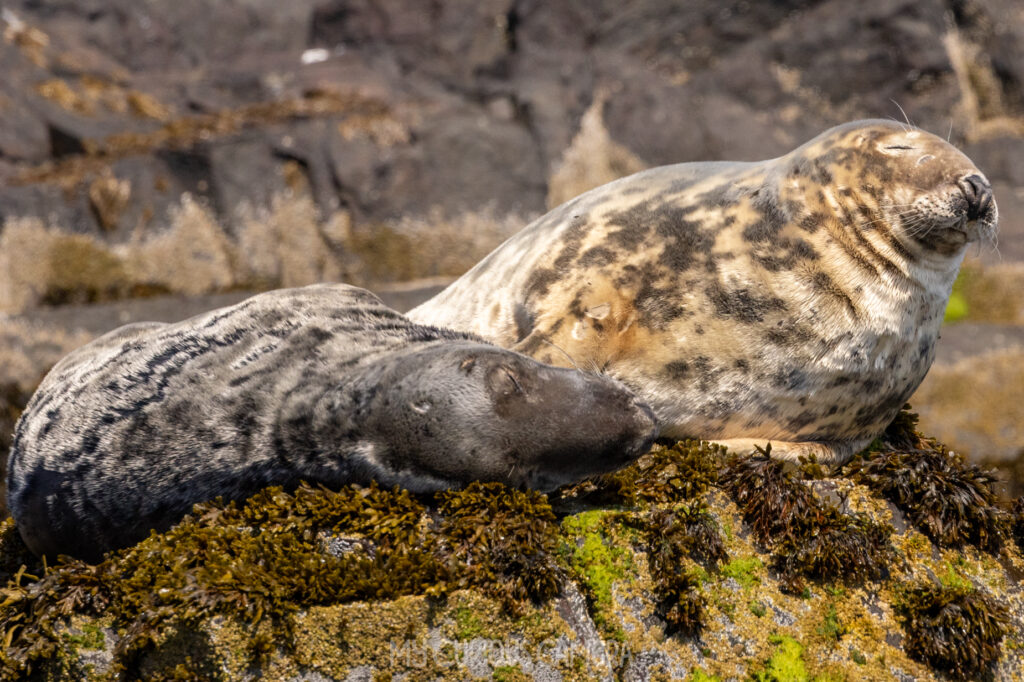
Two Atlantic Grey Seals hauled out and lounging on dark, seaweed-covered coastal rocks surrounded by ocean swell off the coast of Seahouses.
3. The Coastal Giants: Atlantic Grey Seals
The wildlife safari doesn’t stop when you leave the bird colonies. The waters and lower rocky skerries surrounding the outer Farne Islands are home to one of the UK’s most important breeding colonies of Atlantic Grey Seals.
 
As your ferry travels between the islands, you will see dozens of these massive, soulful-eyed marine mammals hauled out on the seaweed-covered rocks, or popping their heads up like curious periscopes from the swell.
Photographic Strategy from a Rocking Boat
Photographing the seals brings a totally different challenge than tracking fast-paced birds. They are often lounging completely still, but you are shooting from an unstable, bobbing ferry that is constantly drifting past.
 
  • The Technique: To combat the roll and vibration of the boat, lean on a fast shutter speed and keep your camera set to continuous tracking autofocus. Frame them as the boat drifts into alignment, capturing the relaxed texture of the seals contrasted against the crashing white surf and dark, wet kelp. To achieve this flexibility without carrying multiple camera bodies, I always use a highly versatile telephoto setup. You can read my full thoughts on why this works in my complete photography gear guide.
 
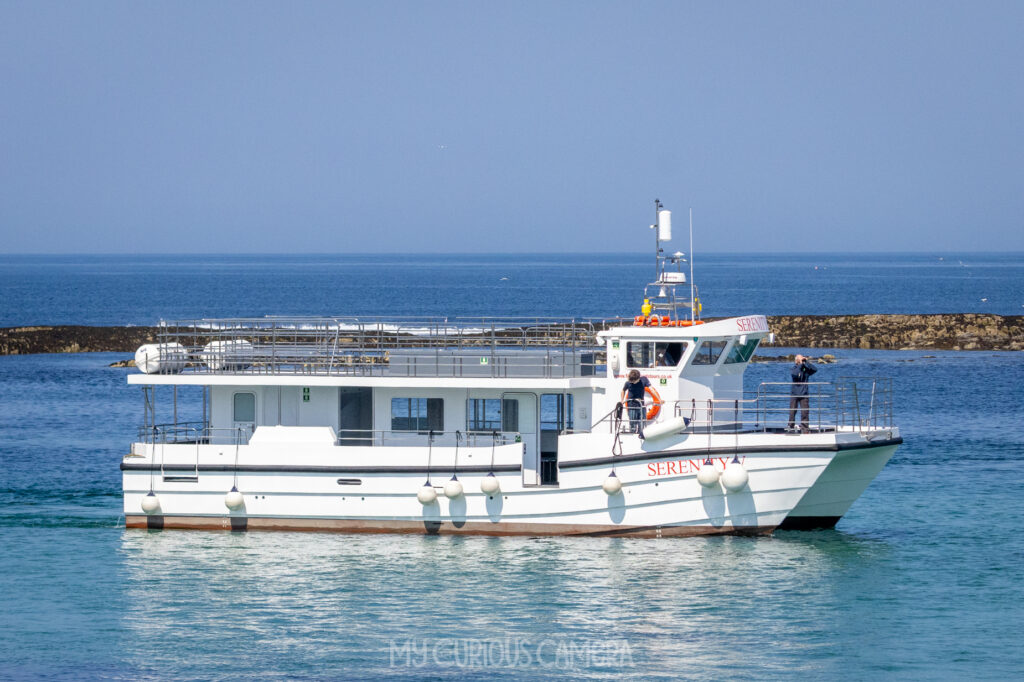
Serenity Boating Tours sits waiting for us in the beautiful, crystal clear blue waters around the Farne Islands
Logistics: Your Farne Islands Wildlife Safari
Planning a trip to see the Farne Islands wildlife is an unforgettable experience
 
To experience this incredible wildlife spectacle first-hand, you need to head to Seahouses Harbour in Northumberland. I highly recommend booking your crossing with Serenity Farne Island Boat Tours. They are absolutely brilliant, have fantastic local knowledge, and position the boat beautifully so you can get the best possible angles on the cliff birds and seals without disturbing them.

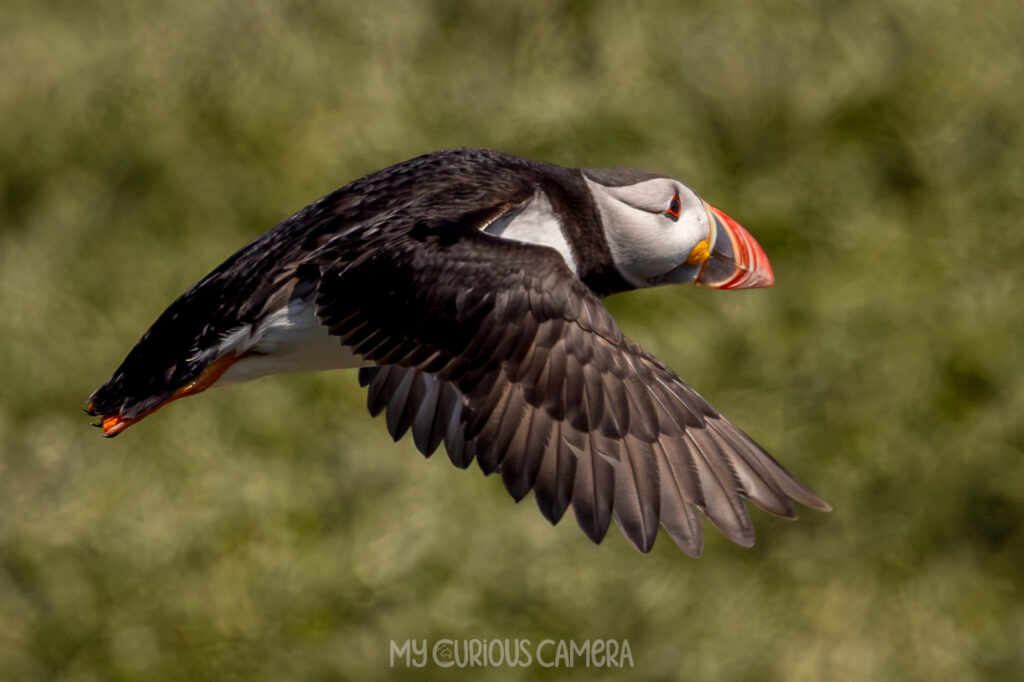
A stunning photo of a low Puffin against the greenery of the burrows on a hill top

Want to capture the ultimate Puffin shot? If you want to know exactly how to freeze the islands’ most famous residents zooming through the sky with a beak full of fish, check out my Photographing Puffins in the Farne Islands: A Complete Guide for exact Canon R5 settings, custom button configurations, and post-processing Lightroom tips!

You Might Also Like

Leave a Reply

error: Content is protected !!