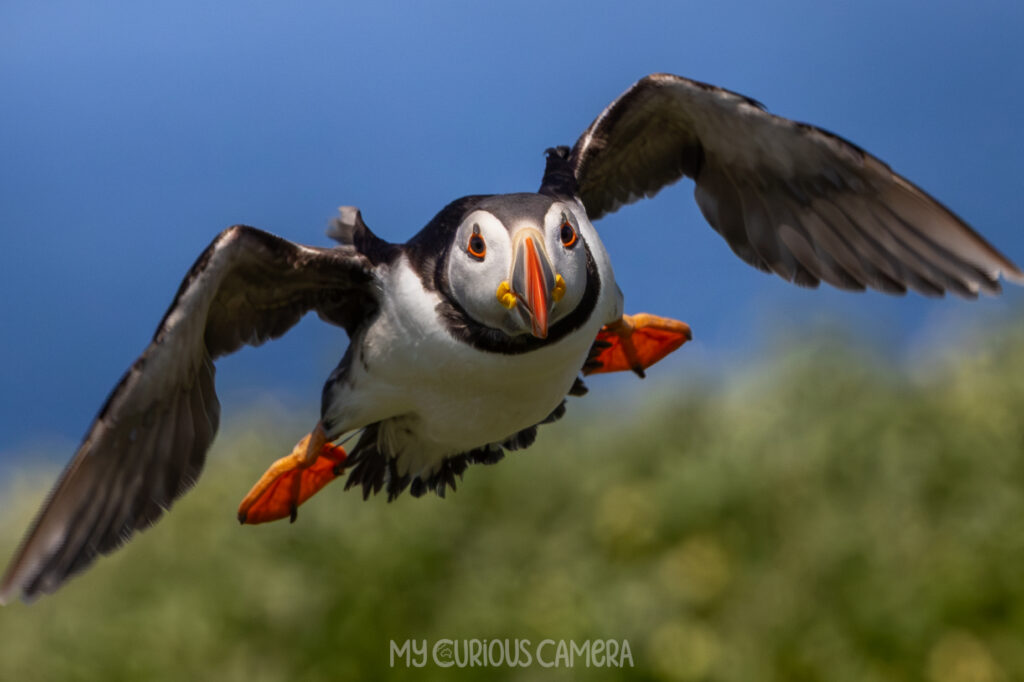
When wildlife lovers think of the Farne Islands off the Northumberland coast, the image that usually comes to mind is an adult Atlantic Puffin balancing a beak full of shimmering sandeels. But if you shift your lens away from the burrows and look toward the towering volcanic basalt cliffs, an entirely different, high-stakes survival story unfolds.
Every summer, these rocky precipices become an intense battleground for the next generation of seabirds. For the chicks of the Farne Islands, growing up requires facing two completely opposite—but equally brutal—parenting styles.
Here is a behind-the-lens look at the extreme drama of seabird survival.
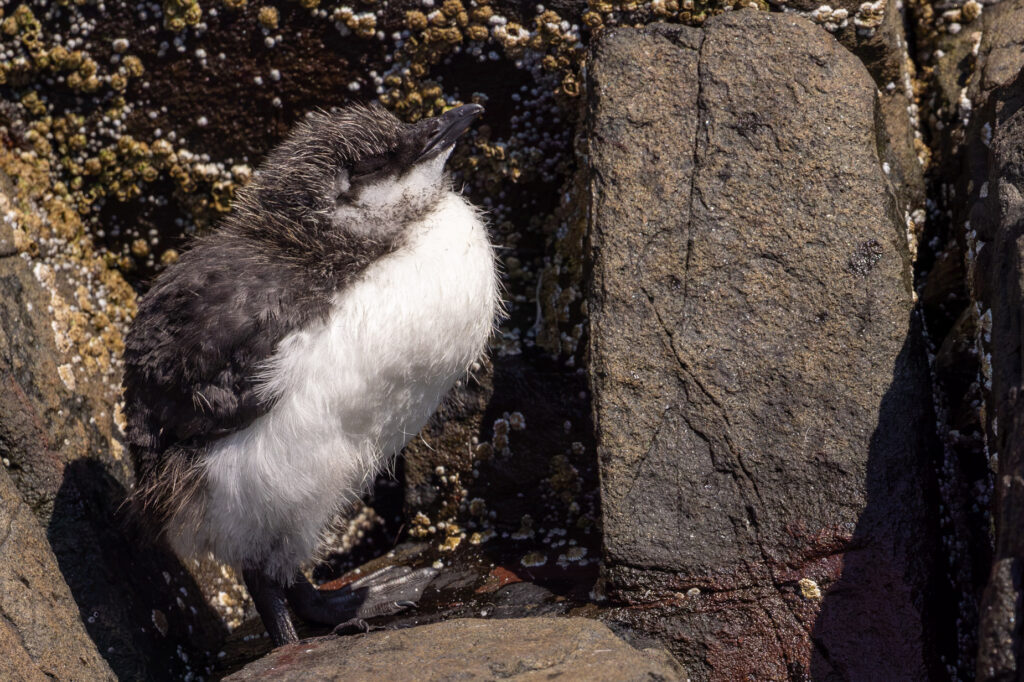
Contemplating the jump!
The Guillemot Jumplings: The Ultimate Leap of Faith
If you drift alongside the crowded cliff ledges on a boat crossing with Serenity Farne Island Boat Tours, you will see thousands of Common Guillemots standing shoulder-to-shoulder. But by mid-July, a mind-blowing phenomenon takes place here that tests the absolute limits of nature: the departure of the “Jumplings.”
At just two weeks old, a young guillemot chick is still covered in fluffy down. It cannot fly. Its wings are barely stubby little paddles. Yet, to survive, this tiny chick must willingly throw itself off a vertical cliff face, plunging hundreds of feet down into the crashing, boulder-strewn North Sea swell.
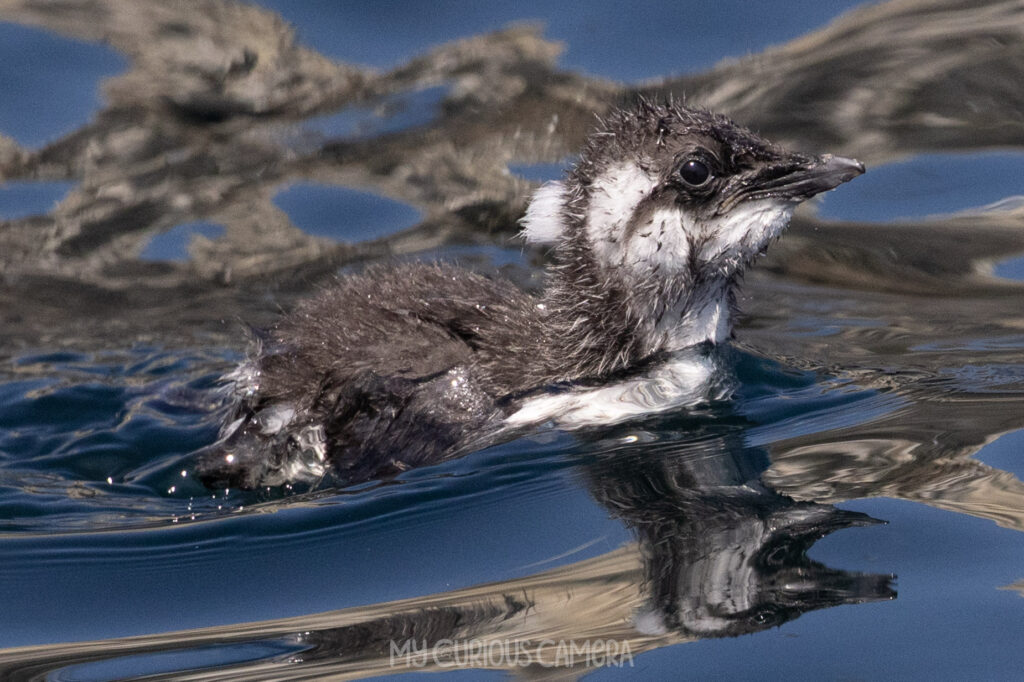
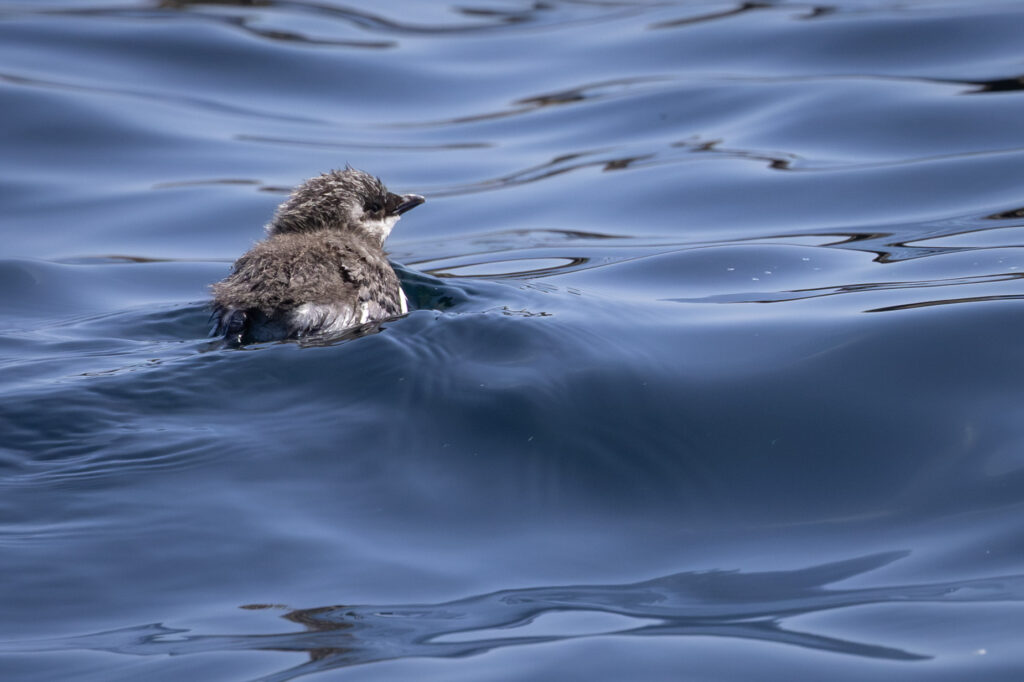
A fluffy young Guillemot jumpling chick swimming in the ocean, showing its damp plumage and sharp reflection on the water's surface.
Why Face the Plunge?
The strategy behind this seemingly insane parenting style is all about food supply and safety. The cliff ledges are magnets for predatory gulls. By forcing the chick to sea early, the parents move their young closer to the rich open-ocean feeding grounds.
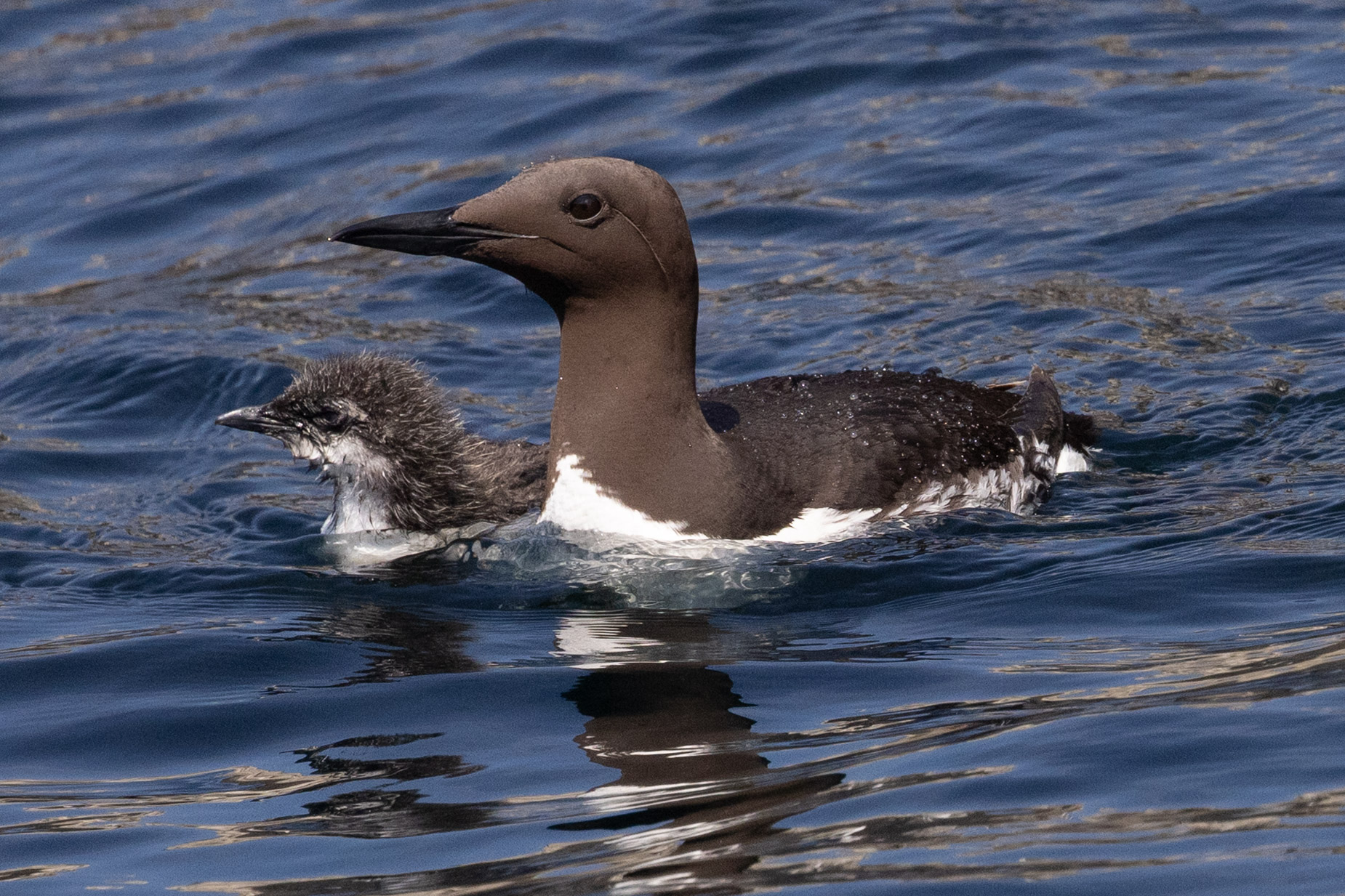
The Emotional Anchor: The chick doesn’t jump blindly. Down in the treacherous, rocking surf below, its father sits waiting, screaming a frantic, unique vocal call up into the wind. Guided entirely by the sound of its father’s voice, the chick takes a literal leap of faith. Most bounce off the rocks or hit the water like tiny stones, but their light, downy bodies act as shock absorbers. Once reunited in the waves, the father instantly escorts the chick away from the cliffs out to the open ocean, where the young bird will spend the next several years of its life without ever touching dry land.
Swimming with Dad
Sticking close to home - It will be a little while yet for this little one.
The Kittiwake Chicks: Life on a Ledge
If the guillemots are defined by a wild leap, the Black-legged Kittiwakes are defined by precarious precision. Tucked into the narrowest, most vertical rock crevices, these elegant gulls build their nests out of mud and tightly packed seaweed, literally gluing them to the sheer cliff faces.
For a Kittiwake chick, early life is a game of absolute stillness.
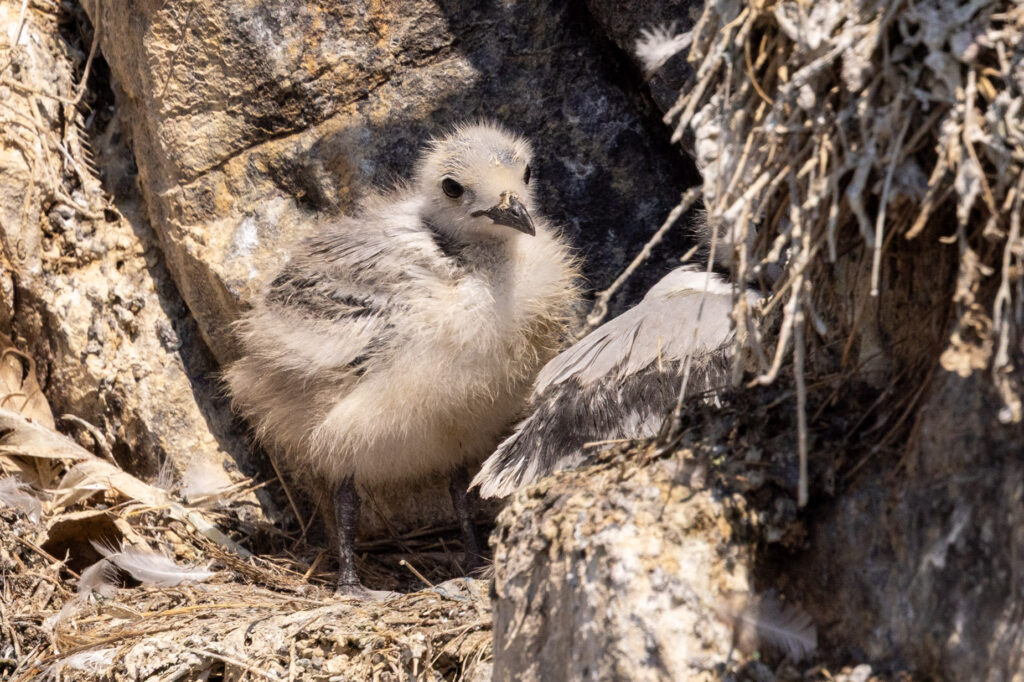
Unlike ground-nesting birds, a Kittiwake chick is hardwired by evolution to stay completely stationary. Their nests are often barely wider than a deck of cards, suspended over a lethal drop to the jagged rocks below. One wrong step, an accidental nudge from a parent, or a sudden, brutal gust of UK wind means a fatal fall.
Almost ready to take the plunge
The Photographic View
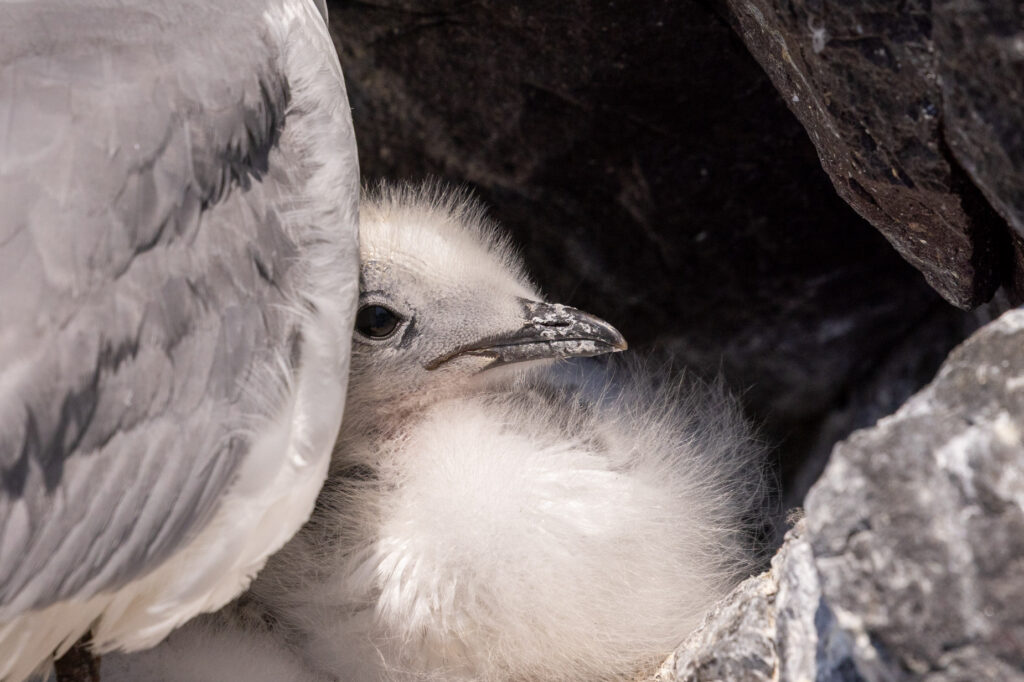
When you lock focus on an adult tending to a calling chick on these sheer vertical drops, the framing is intensely dramatic. The pure white and soft grey plumage of the adult contrasts sharply against the dark, wet basalt rock, while the open beak of the hungry chick creates a powerful focal point of raw vulnerability.
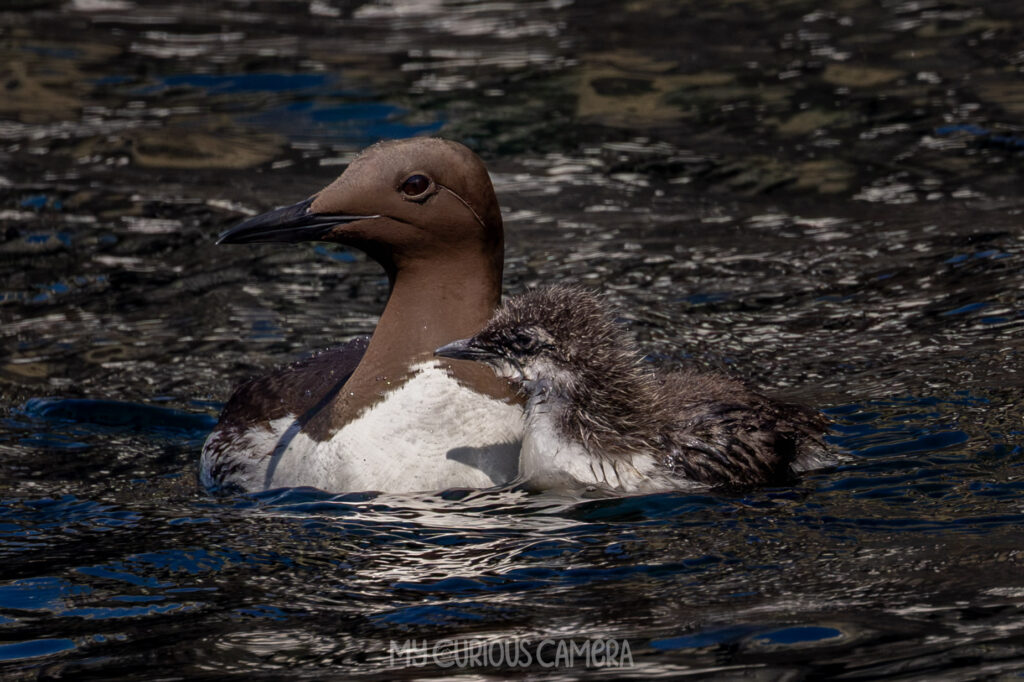
A lone Guillemot chick swimming away into the deep blue ocean swells, heading out to the open sea.