The Farne Islands off the coast of Northumberland are widely considered the “Galapagos of the North”—and for good reason. During nesting season, these rocky islands become a chaotic, beautiful haven for thousands of Atlantic Puffins.
If you are planning a trip to capture these iconic seabirds, getting crisp images requires the right strategy, sharp reflexes, and the perfect gear setup to handle intense conditions.
Here is my complete guide to capturing the ultimate Farne Islands puffin shot.
The Secret to the Perfect Lens Selection
When packing for the Farnes, lens choice is crucial. You might think you only need a massive prime lens, but the reality on the ground is completely different.
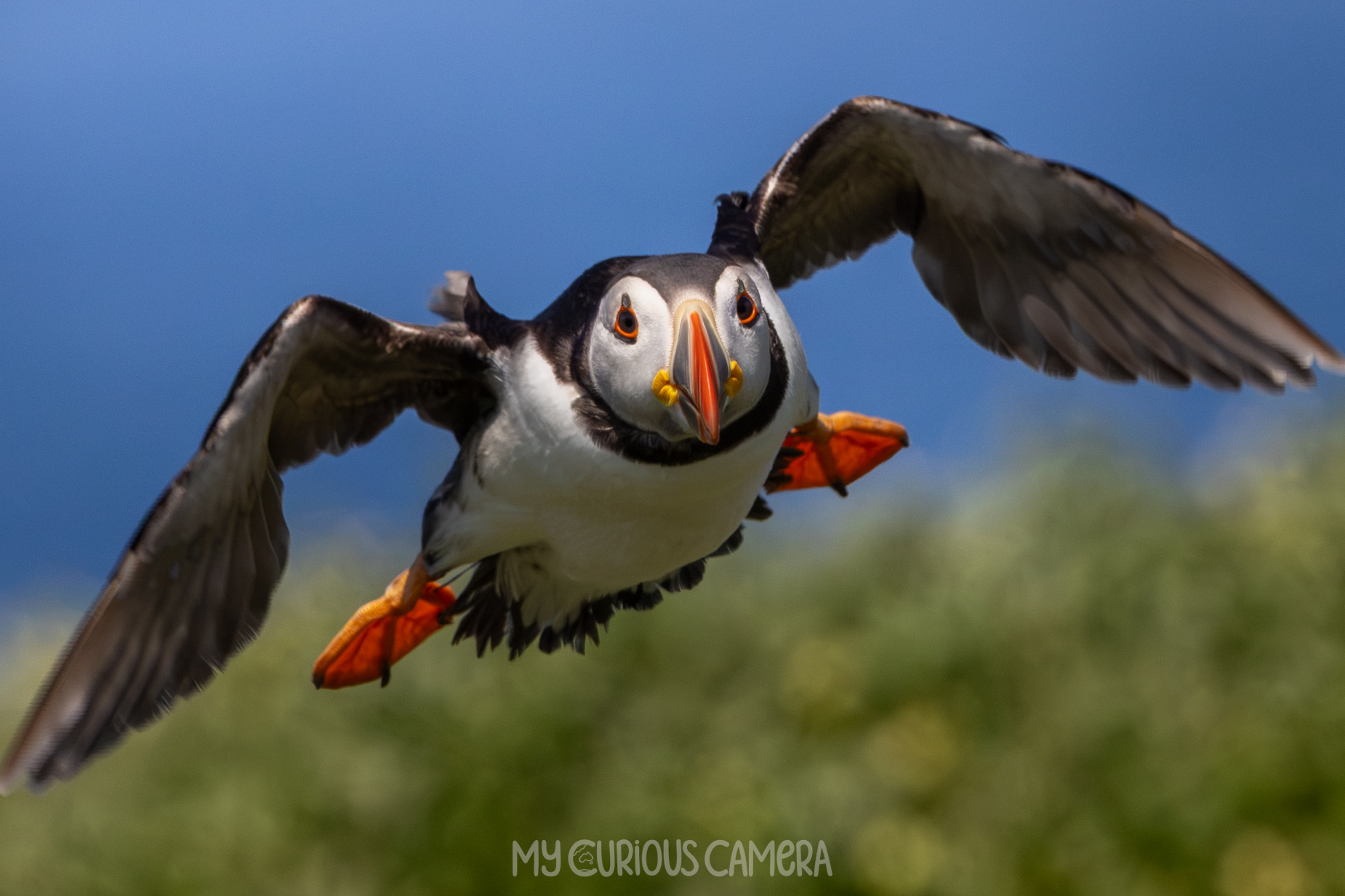
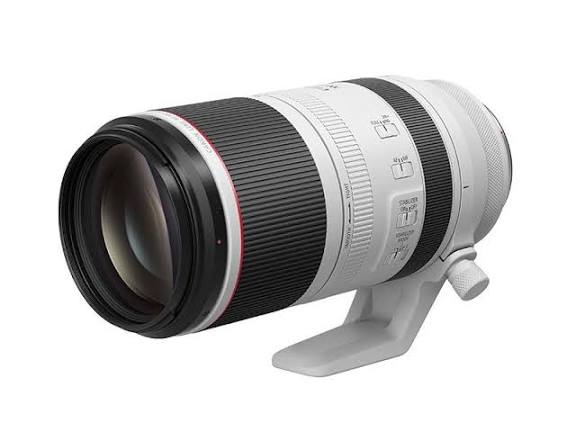
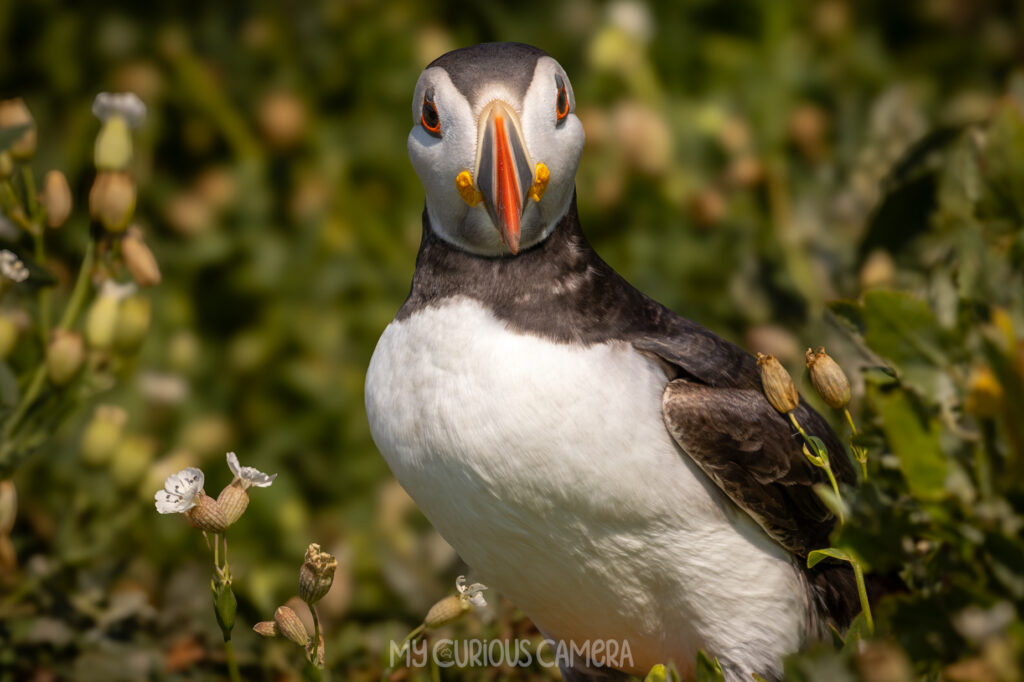
The puffins here can be incredibly close, sometimes landing right next to the boardwalk paths. However, they also zip across the sky and out to sea in a flash. This unpredictable movement makes a 100-400mm zoom lens the absolute perfect tool for the job.
The versatility allows you to quickly zoom out when a puffin lands right at your feet, or punch into 400mm to track them as they come in from the water. If you want to see how this lens stacks up against the rest of my travel kit, check out my complete breakdown of the best photography gear for an epic safari adventure.
Note: See how I use custom functions to maximise lens functionality below.
I use the old 100-400 but have included the link to the new 100-500mm f4.5-7.1L, which is the equivalent without the adaptor
Surviving the Currently “Insane” UK Contrast
You don’t get intense, blazing sunlight often in the UK, but lately there have been some insane heat waves with bright sun, which create a photographic nightmare. The stark contrast between a puffin’s bright white chest and its jet-black feathers is brutally difficult for a camera sensor to manage. Not to mention the heat haze, reflections from the water, and the noise from heat.
Take it from this Aussie who is used to these conditions: to beat the harsh sun, I used two non-negotiable rules:
Keep the sun behind you: Whenever possible, position yourself so the light evenly illuminates the front of the bird, preventing harsh, muddy shadows across the face.
Expose for the highlights/shadows balance: Keep a close eye on your histogram. You have to expose carefully to avoid blowing out the white plumage while still retaining detail in the dark black feathers.
Tackle harsh light “noise” in post: Bright, direct sunlight introduces a harsh, gritty texture in the deep shadow areas of black feathers—a different kind of digital noise. To clean this up without sacrificing the intricate detail of the plumage, I run the files through Lightroom’s Denoise tool. It perfectly balances the contrast, leaving the whites crisp and the dark feathers beautifully smooth.
Top Tip: You are better off underexposing than blowing out your highlights. You’ll never get those back!
Tracking “Little Rockets” From an Unstable Boat
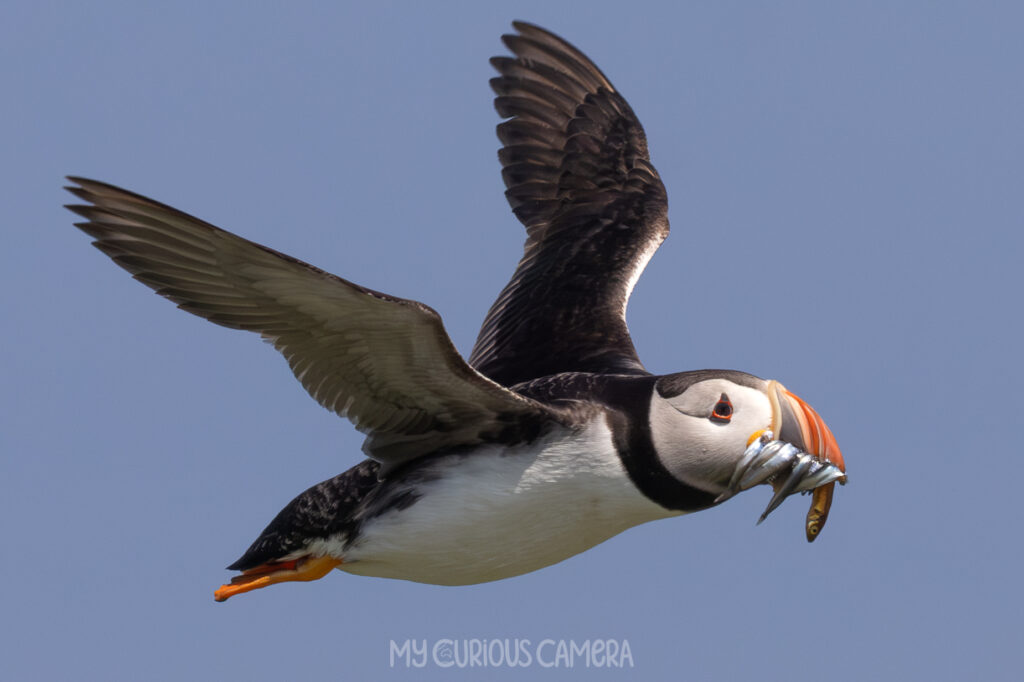
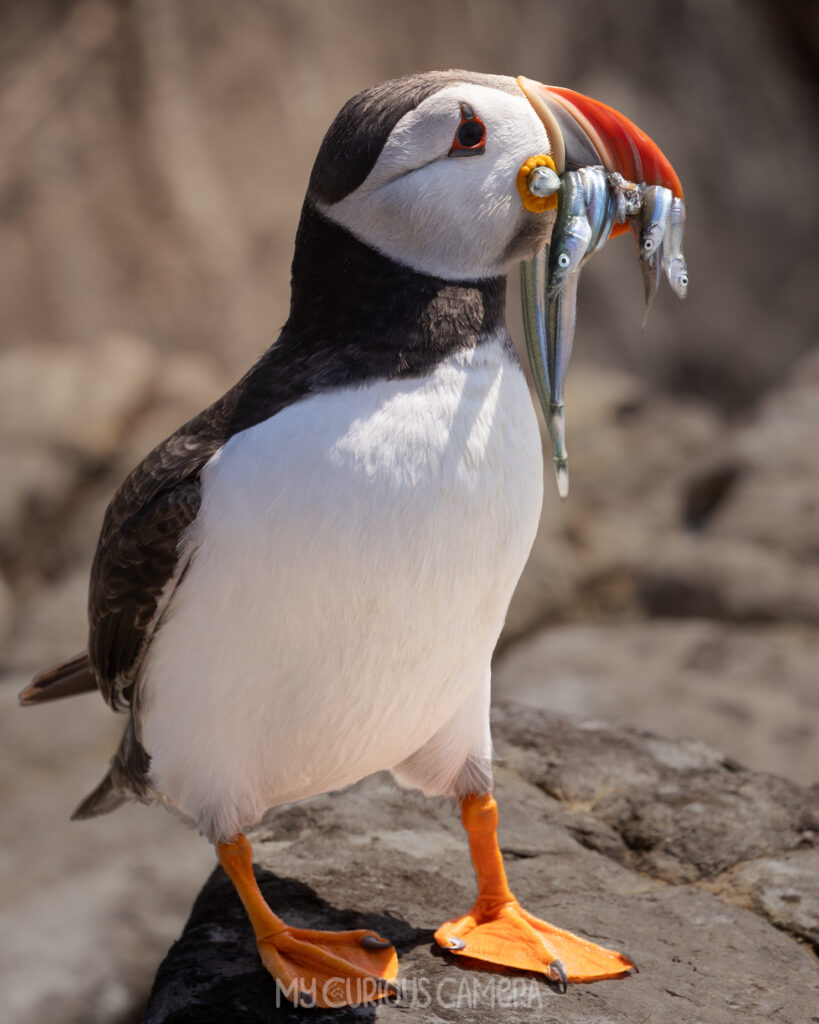
Capturing a puffin in flight with a beak full of sandeels is the holy grail of UK wildlife photography. But let’s be honest: these birds fly like erratic, clocked-up rockets. They don’t fly in a straight line; they dart, weave, and zoom this way and that. Worse yet, they will suddenly blast up over the cliff edge carrying their catch with zero warning.
To make matters more complicated, some of the time, you are shooting from a ferry. The boat is constantly moving, rocking, and completely unstable.
To freeze that frantic motion and counteract the bobbing boat, your camera settings need to be incredibly aggressive.
Behind the Lens: My Exact Settings & Custom Functions
To capture these “little rockets” in flight while maintaining the flexibility to shoot them at your feet, you cannot afford to waste time digging through menus. I heavily rely on the Canon R5’s Custom Shooting Modes (C1–C3) to switch my entire camera profile instantly.
Here is exactly how I map my custom functions for the Farne Islands:
Custom Mode C2 (Birds in Flight): Configured specifically for tracking birds on the wing at a distance. This mode engages continuous eye-tracking AF and dials in a 1.6x crop multiplier, allowing me to punch into the frame automatically and get that crucial extra reach for distant incoming puffins without swapping lenses.
Custom Mode C3 (Close-Up Portraits): Configured for when puffins land right on the boardwalk or grassy banks next to you. This instantly switches the camera back to full-frame, single-point focus, giving me maximum sensor resolution and precise control over the focal point for intimate portraits.
Using a sunny day as a baseline, my core exposure settings within these modes were:
Shutter Speed: 1/3200 sec – Crucial for freezing the extreme wing speed and cancelling out ferry vibrations.
Aperture: f/8.0 – Ensures both the eye and the sandeels in the beak stay tack-sharp.
ISO: 400 – Allowed me to keep the grain non-existent while maintaining that ultra-fast shutter.s
The Unforgiving Puffin Calendar: When to Visit
You cannot just show up to the Farne Islands at any time of year and expect to see puffins. These birds spend the vast majority of their lives out at sea, only returning to land for a few brief weeks in the spring and summer to breed and raise their young.
If you want to catch the peak action, you need to sync your calendar perfectly:
April to Early May (The Arrival): The puffins arrive on the islands to reclaim their burrows and find their mates. This is a great time for clean portraits and courtship behaviour (billing), but you won’t see them carrying fish yet.
June to Mid-July (The Sweet Spot): This is the ultimate window. The eggs have hatched, and the parents are working overtime to feed their “pufflings.” This is the only time you will see them zooming over the cliffs with beaks crammed full of glittering sandeels.
Late July to August (The Departure): By late July, the pufflings leave their burrows and head out to sea. I was on the islands on July 9th, and by the end of the month, the colonies had completely cleared out. If you book a trip even a week or two too late into August, you risk missing them entirely.
Top Tip: Because this window is so incredibly tight and daily visitor slots are strictly capped to protect the nesting birds, you need to book your ferry months in advance. Make sure to check the official National Trust Farne Islands guide for seasonal safety updates. When you are ready to get out onto the water, I highly recommend booking your crossing with Serenity Farne Island Boat Tours—they were absolutely brilliant, incredibly steady handlers, and positioned us perfectly to view the wildlife.
Quick Takeaways for Your Trip
Lean Hard on Continuous AF: Set your camera to its fastest continuous tracking mode. Because the puffins appear suddenly over the cliffs and dart everywhere, your autofocus needs to lock on instantly.
Watch the Beaks: Look for puffins circling overhead with glittering silver in their mouths. Those are the ones carrying sandeels back to their burrows, making for the best action shots.
Expect Bumpy Landings: Puffins are incredible swimmers, but notoriously clumsy landers. Keep your camera on high-speed continuous shooting mode to catch the hilarious moment they crash-land on the grassy banks.
Happy Puffin shooting N x
Want to see more images of puffins so you know what to expect?
Ready to discover the rest of the islands’ wildlife?
While the puffins are a major highlight, the cliffs and waters are packed with incredible marine life. Check out my companion post: The Ultimate Farne Islands Wildlife Safari Guide: Beyond the Puffins to see my shots of the diving Arctic Terns, nesting Guillemots, and lounging Grey Seals!