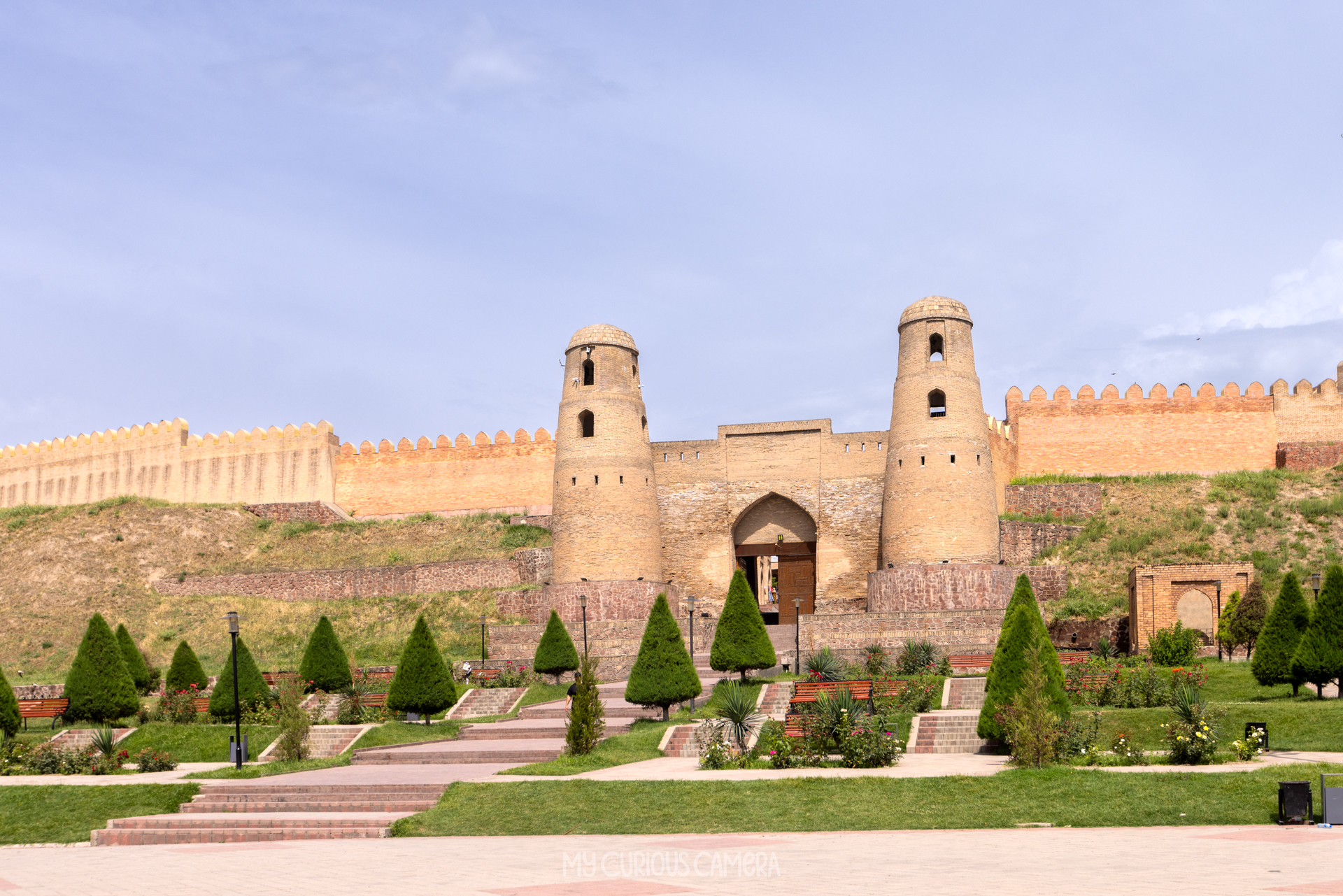
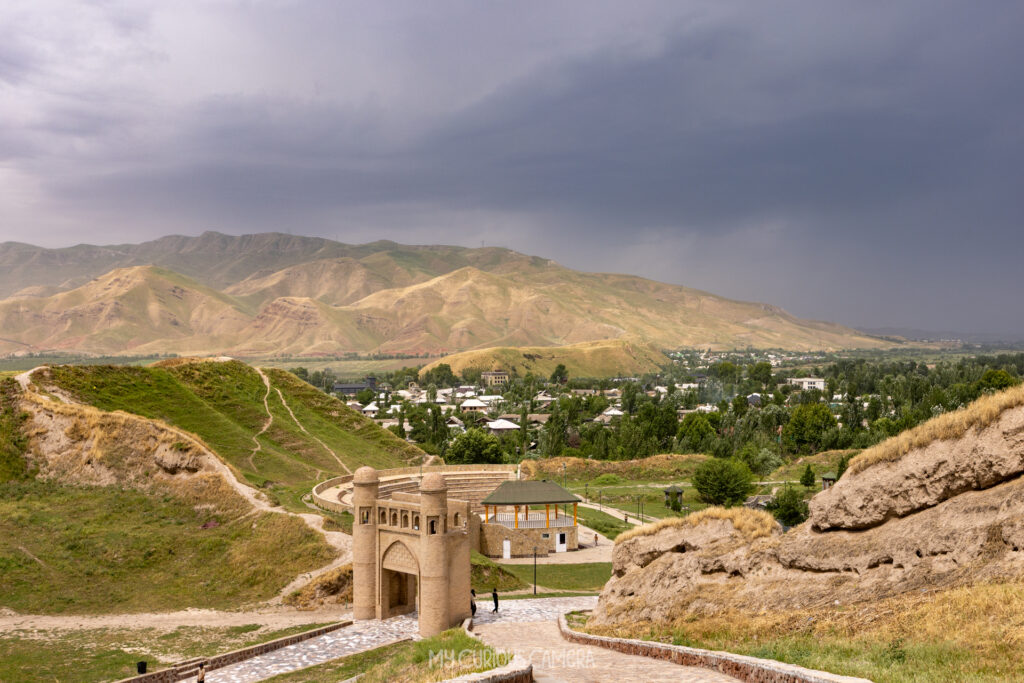
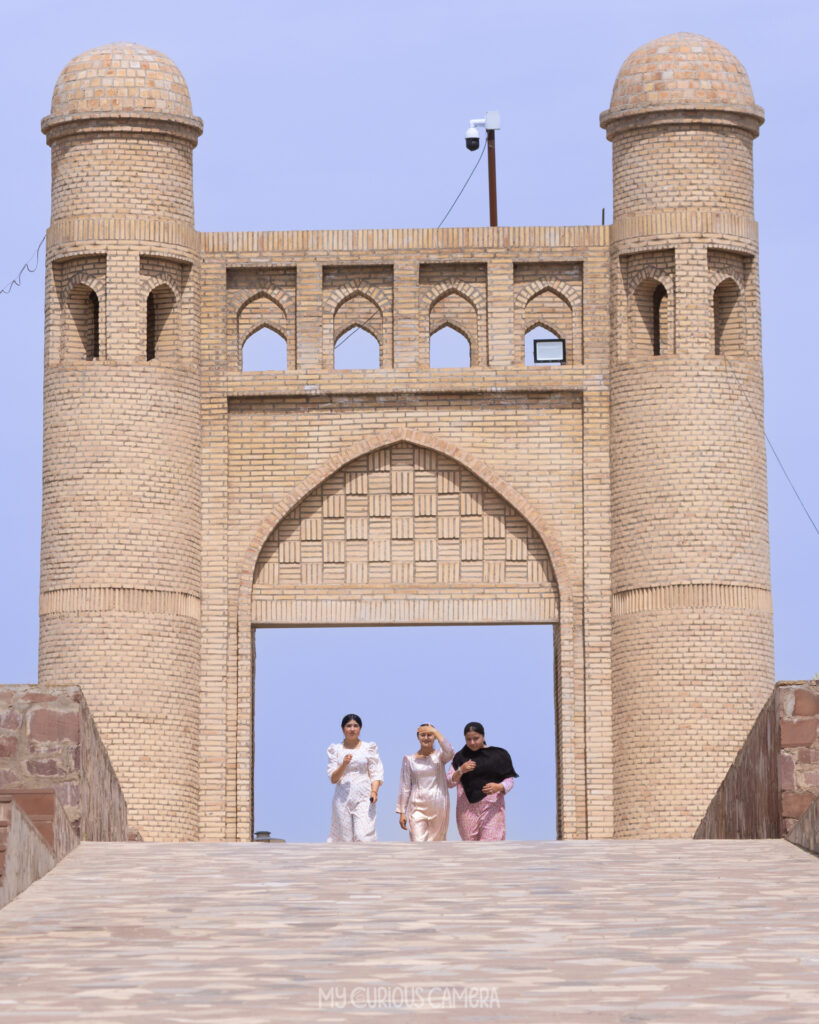
Just 30 kilometres west of Dushanbe sits Hisor Fortress, one of Tajikistan’s most important historic sites.
For more than 2,000 years this strategic hilltop stronghold has been destroyed, rebuilt, occupied and restored by successive empires. While much of what stands today is a sympathetic reconstruction, enough remains to transport you back through centuries of Central Asian history.
The fertile Hisor Valley has long been a crossroads of civilisations, attracting merchants, conquerors and famous travellers such as the Chinese monk Xuanzang over 1,300 years ago.
The fortress itself may not be overflowing with original ruins, but the museum within the complex offers something just as valuable, a fascinating glimpse into traditional Tajik life.
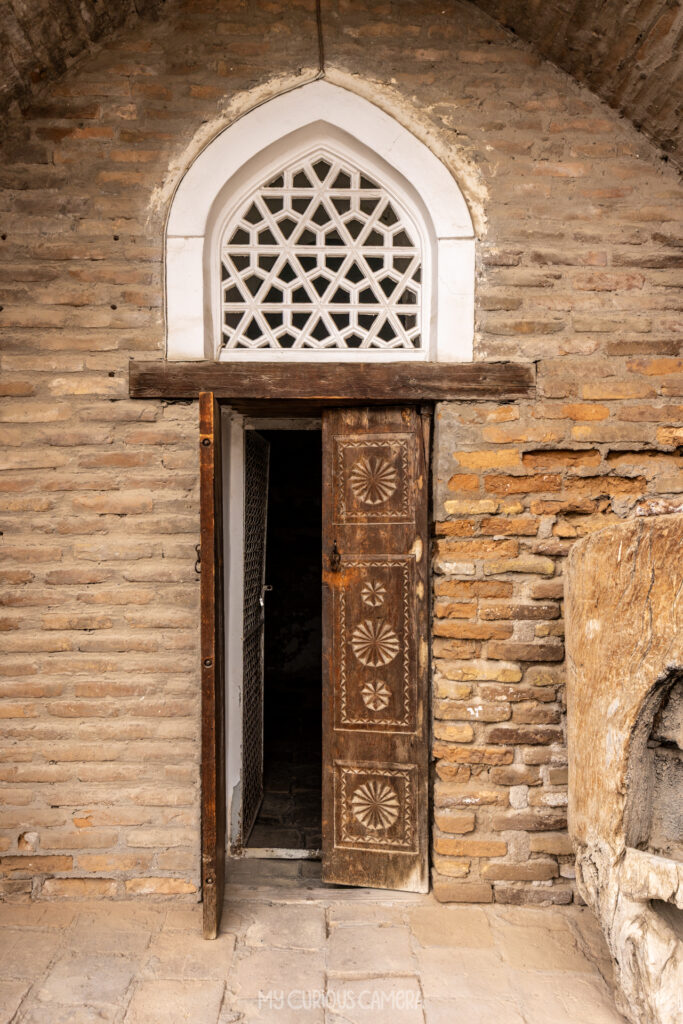
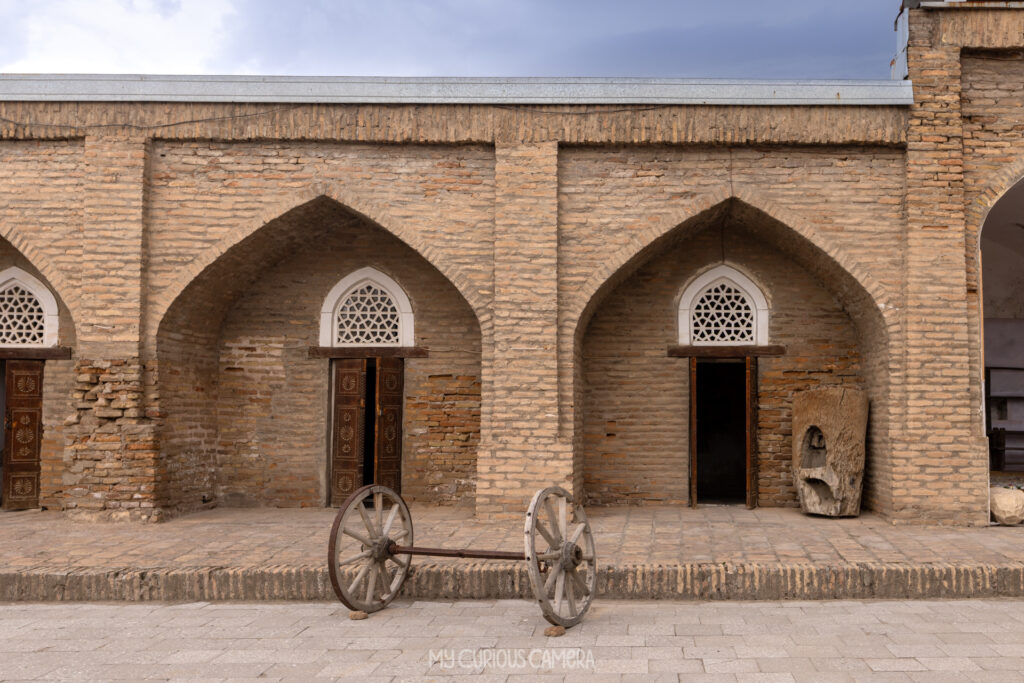
Hisor Madrasah Museum courtyard
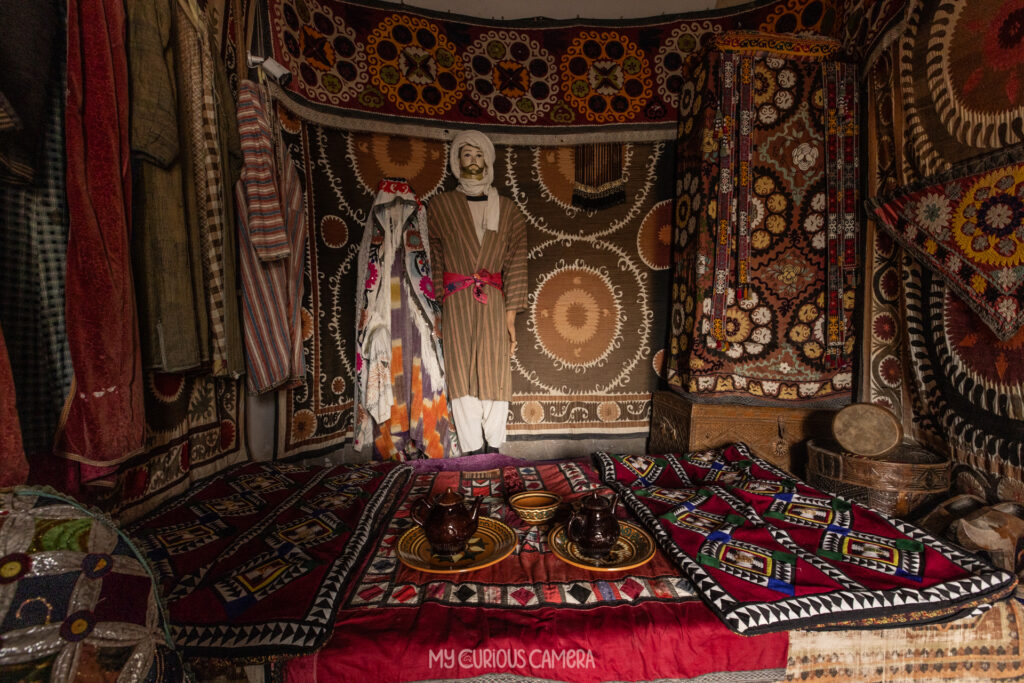
Inside the museum, this beautifully decorated formal room is bursting with colour and texture. The embroidered textiles feature circular solar medallions, symbols of fertility, light and protection. Layered kurpacha quilts surround a low table where families would gather to share tea.
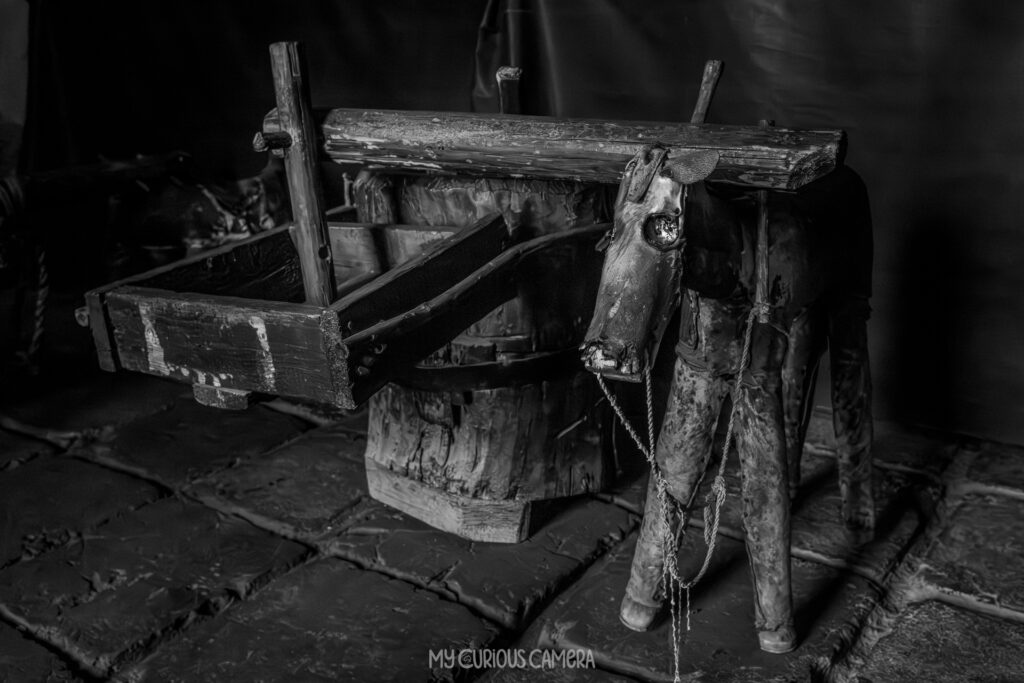
An animal-powered oil press (juvoz) demonstrates the ingenuity of traditional village life. Using oxen or donkeys to turn the heavy timber mechanism, oils were extracted from flax, sesame and cotton seeds long before modern machinery arrived.
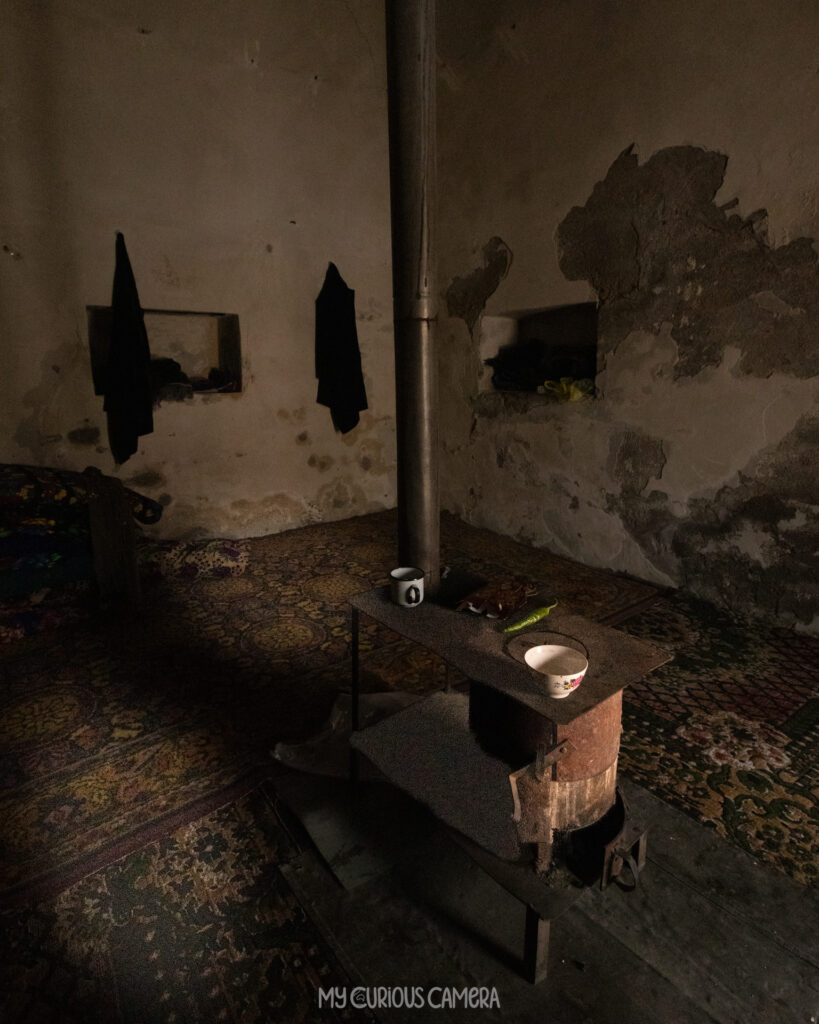
A recreated student cell shows how young scholars once lived while studying at the madrassa. The central burjuyka stove provided warmth and somewhere to prepare simple meals, while small wall niches (taqcha) stored books, lamps and treasured possessions.
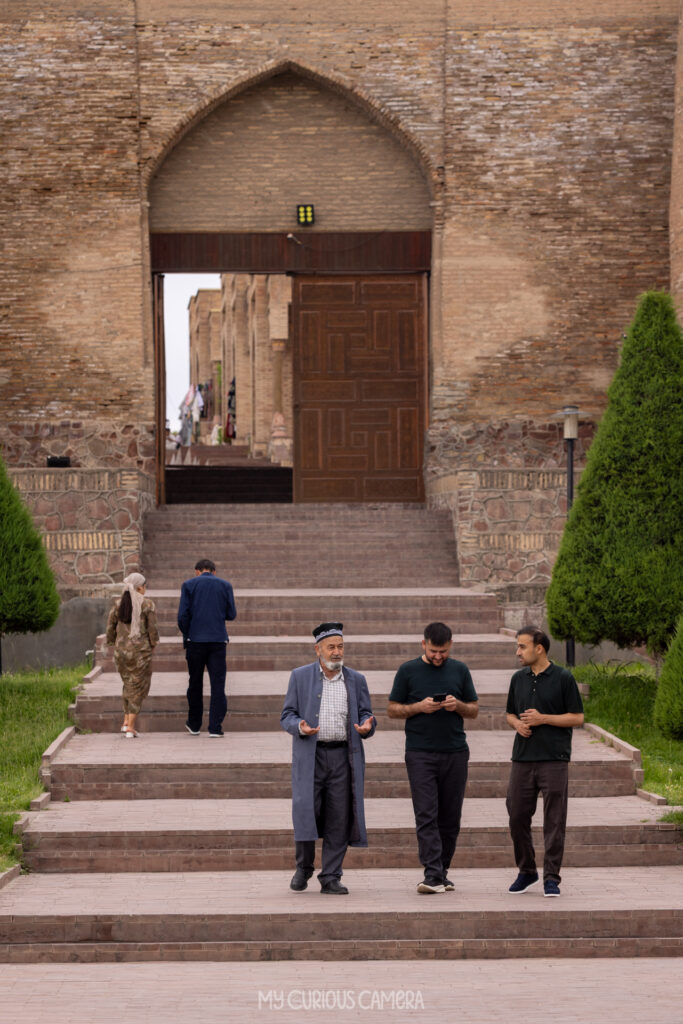
Two massive cylindrical defensive towers flanking a grand arched portal. This served as the heavily fortified main entrance to the citadel, which was the royal residence of the governor (Bek) under the Emirate of Bukhara.
My Curious Camera Perspective
Although the fortress itself is largely reconstructed, I found the museum to be the real highlight. Rather than simply looking at old stones, I came away with a much better understanding of everyday Tajik life, the homes, clothing, traditions and practical ingenuity of the people who lived here. Sometimes it’s these small cultural details that stay with you long after you’ve left.